


 By
By Survival skills are often portrayed as something you can master through videos, books, or by observing others. We imagine how we would react in a real-life survival situation, believing that theory is enough to guide us through the toughest moments. However, the truth is, you can never truly know how you will perform until you’re faced with exhaustion, hunger, and uncertainty. That’s when instinct takes over, and all the theory you’ve read about fades into the background. The only way to build that instinct is through hands-on experience.
The Mind Breaks Before the Body
One of the greatest misconceptions in survival situations is that your body will give up first. In reality, it’s often your mind that quits long before your body does. It starts with small doubts, followed by fear, and then the voice in your head that tells you things are too difficult. But this is exactly where training comes in. Good training teaches you how to silence that voice. It helps you focus on your breath, slow down, and make rational decisions instead of reacting out of panic. When your fire won’t light or the night feels endless, it’s your training that keeps you calm and sharp.
In tough situations, you learn that fear is natural, but it doesn’t have to control you. The more you practice staying calm and thinking clearly under pressure, the easier it becomes to apply that calmness in everyday life, too.
Why Training Beats Theory
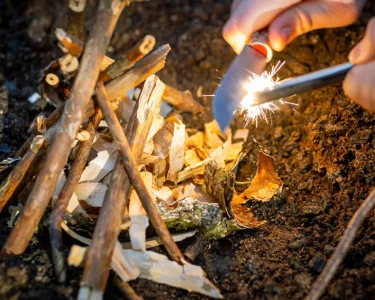
There’s a reason why survival instructors emphasize practical, hands-on experience. Watching a video on friction fire isn’t the same as seeing smoke rise from your first ember after multiple failures. Reading a navigation book doesn’t compare to realizing you’ve been walking in circles, then figuring out how to get back on track. These are the moments that teach real confidence—not just knowledge. You don’t rise to the level of your theoretical knowledge; you fall to the level of your practical experience.
If you want to improve, stop theorizing and start doing. Take a class that challenges you, and push yourself to fail in a controlled environment where you can learn from your mistakes. Real progress happens when you’re testing yourself and learning through trial and error.
The Power of Discomfort
Comfort often prevents us from learning the hard lessons that discomfort can teach. When you’re cold, wet, or hungry, your perspective changes. Suddenly, warmth, patience, and problem-solving skills are more valuable than any gear or gadget. Spend a night under a shelter you built with your own hands. Try to start a fire in the pouring rain. Hike up a steep ridge until your legs feel like they’ll give out. These experiences strip away everything irrelevant and force you to focus on what truly matters.
The more you expose yourself to controlled discomfort, the less fear it holds over you. It becomes something familiar—something you can handle. Instead of breaking you, discomfort shapes you into someone capable of handling tougher situations in the future.
Make Survival a Way of Life
Survival isn’t just a set of skills you collect or a checklist you memorize. It’s a mindset. It’s about knowing that when things go wrong, you won’t. This confidence doesn’t come from watching videos or reading books; it comes from real-world experience. Every failure, every mistake, and every small victory contributes to who you’re becoming as a survivalist. The more you train, the more it becomes part of who you are.
So, stop dreaming about survival—start living it. Build your skills through real experience, embrace discomfort, and transform the way you think about survival. It’s not just a set of tricks; it’s about developing the mental strength and skills to handle whatever the wild throws your way.