

 By
By When heading into the wilderness, many adventurers make the mistake of leaving behind essential survival gear. Whether it’s for a day hike or an extended trip, being prepared for unexpected situations can mean the difference between a rough night outdoors and a real emergency. By carrying just a few simple items that weigh less than 10 pounds, you can easily handle unexpected challenges. These items are known as the “5 C’s of Survival,” and they cover the most basic survival needs: Cutting Tool, Combustible, Cover, Container, and Cordage.
1. Cutting Tool
A reliable knife is arguably the most valuable tool in any survival kit. With the right knife, you can perform a wide range of tasks, from building shelter to making fire and even preparing food. A full-tang, sturdy knife is essential for survival, as it is more durable and versatile than folding knives. It’s important to choose one that feels comfortable in your hand, and that you’re familiar with how to use. While there’s no one-size-fits-all answer, your knife should be a well-made blade that can serve a variety of purposes in the wild.
2. Combustible: Fire Starting Tools
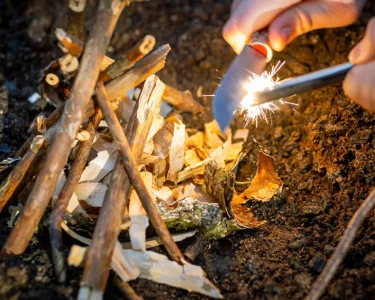
In any survival situation, the ability to start a fire is vital. It provides warmth, helps you cook food, and can be used for signaling. While a standard Bic lighter is a common fire-starting tool, it’s not ideal for all conditions—especially in high winds, cold temperatures, or wet environments. A ferro rod (also known as a ferrocerium rod) is a better primary fire-starting tool since it works in almost all weather conditions. It requires practice, but once you master it, it’s a reliable option for fire starting in challenging circumstances. Be sure to practice with your ferro rod until you’re comfortable using it, even in difficult conditions.
3. Cover: Emergency Shelter Materials
Besides clothing, having the right shelter gear is crucial for surviving an emergency night outdoors. A durable rain poncho can double as a makeshift shelter, offering protection from the elements while being easy to set up between two trees or on the ground. Mylar blankets, also known as space blankets, are lightweight but effective tools for retaining body heat. They work best when held slightly away from your body to trap warm air—don’t wrap them tightly around yourself, as they don’t provide insulation like regular blankets. Proper use of these materials will help keep you warm and safe, even in cold conditions.
4. Container: Water Storage and Purification
Having a container to hold water is vital for staying hydrated in the wild. A single-walled metal canteen is the best choice for a survival container. Unlike plastic bottles, metal can be placed directly in a fire to boil water for purification, making it versatile and practical. A double-walled, insulated canteen may be comfortable for regular use, but it doesn’t work well for boiling water or providing warmth during a cold night. If you’re using a metal container, make sure it’s a single-walled one that allows you to purify water by boiling it. This can be a lifesaver if you’re in an area without clean water sources, and it can even help warm you up if you’re in a survival situation.
5. Cordage: Rope for Multiple Uses
Cordage, or rope, is an essential item in any survival kit. You don’t need to carry heavy climbing ropes, but paracord is a lightweight and durable option that can serve multiple purposes. It can be used to set up shelter, make traps for food, or repair gear in an emergency. To avoid dealing with tangled messes, cut your paracord into smaller, more manageable lengths (such as 25 feet each) and store them separately. Cordage is invaluable for building shelter, creating snares, and other survival tasks, so having it readily available is crucial.
Putting It All Together
Carrying the 5 C’s of Survival—cutting tool, combustible, cover, container, and cordage—will provide you with the essential items you need to survive in the wild. However, carrying the right gear is only part of the equation. It’s just as important to learn how to use your gear effectively. Practice building fires, setting up shelters, boiling water, sharpening your knife, and tying knots in a controlled setting before heading out. Familiarizing yourself with your gear in advance means you’ll be prepared for anything that comes your way while exploring the wilderness.
Remember, the best survival gear isn’t just about the items you carry; it’s about how well you understand and use them in challenging situations. So, don’t just pack the essentials—make sure you’re ready to use them when you need them most.