

 By
By For women looking to deepen their Pilates practice, advanced techniques offer the opportunity to take core strength to new heights. Pilates is renowned for building a strong foundation in core stability, and once you’ve mastered the basics, the next step is to challenge your body with more complex movements, equipment-based exercises, and mind-body integration. In this guide, we’ll explore advanced Pilates methods that can transform your core strength and improve your overall fitness.
Enhancing Core Activation Through Advanced Pilates
To advance in Pilates, it’s essential to go beyond basic core engagement. A deep understanding of core anatomy and muscle function, particularly the transversus abdominis (the body’s natural corset), is crucial for activating the core efficiently. This deep abdominal muscle stabilizes the spine and supports the internal organs.
Advanced breathing techniques also play a vital role in core activation. Mastering diaphragmatic breathing — expanding the ribcage laterally and posteriorly while inhaling — allows for better engagement of the core muscles. Coupled with a strong mind-muscle connection, advanced practitioners can visualize the core working as a hydraulic system, enhancing control and performance.
The Science Behind Progressive Core Training
Incorporating progressive core training is key to building strength over time. Studies have shown that gradual increases in exercise intensity can lead to significant improvements in endurance and stability. Neuromuscular adaptation, where the body adjusts to specific exercises, is essential for continued progress. This process enhances coordination and core strength by challenging both the muscles and nervous system.
Advanced Mat Work and Complex Movement Patterns
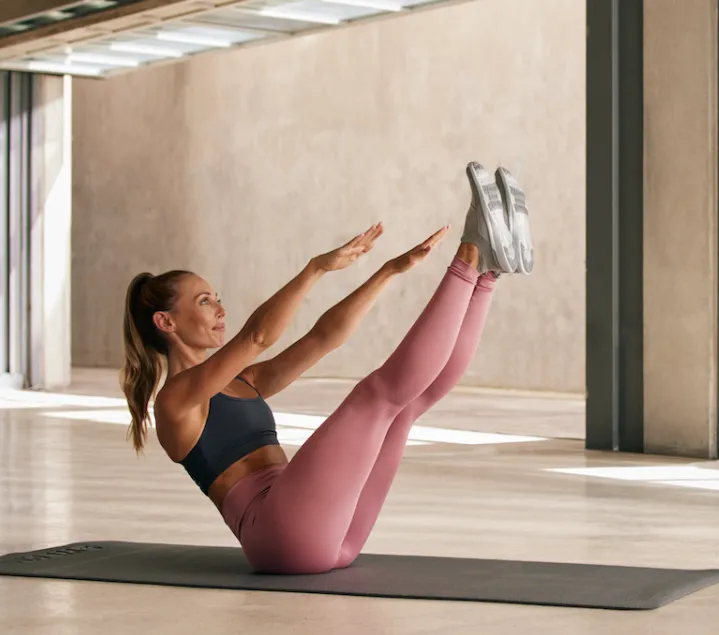
For advanced Pilates practitioners, incorporating complex movement patterns is a way to elevate mat work. Exercises like Rolling Like a Ball can be intensified with a twist, enhancing rotational stability while challenging core strength. Flow sequences, such as combining Teaser, Boomerang, and Corkscrew exercises, provide a dynamic routine that engages the core while incorporating multiple movement planes.
Balance challenges, like the Single Leg Stretch on a balance disc, force the core to stabilize in an unstable position, further improving stability and control.
Advanced Breathing Techniques for Core Engagement
Breathing is a cornerstone of Pilates, and mastering advanced breathing patterns can significantly increase the effectiveness of core exercises. The Pilates Powerhouse Breath, which involves forceful exhalation through pursed lips, intensifies abdominal contraction during exercises like the Hundred or Double Leg Stretch.
Breath-holding techniques are another powerful tool. Holding the breath during key points of challenging movements, like the Teaser or Roll-Up, increases intra-abdominal pressure, providing more support for the spine and enhancing core engagement.
Elevating Pilates with Equipment-Based Progressions
Using equipment, such as the Reformer, Chair, and Cadillac, can intensify core engagement and challenge overall body coordination. The Reformer, with its adjustable springs, allows for dynamic resistance exercises that engage the core in new ways. For example, exercises like the Long Stretch Series with a twist target the core while improving body awareness and coordination.
A series of high-intensity, core-focused movements on the Reformer, like Knee Stretches, Elephant, and Long Back Stretch, progressively fatigue the muscles, pushing core endurance to its limits.
Specialized Equipment Applications
The Pilates Chair and Cadillac offer unique challenges for advanced practitioners. Movements like Teaser on the Chair or the Side Bend improve balance and flexibility while demanding intense core control. On the Cadillac, exercises such as Hanging Pull-Ups or the Tower introduce vertical movements that force the core to stabilize against gravity in various directions.
Additionally, integrating resistance bands into exercises like the Saw adds variable tension that further activates the core, challenging muscles such as the obliques during rotation.
Designing Advanced Core-Focused Routines
To continuously challenge yourself and avoid plateaus, it’s important to incorporate progressive overload in Pilates. This involves increasing repetitions, adding holds during challenging points, or using unstable surfaces to intensify core activation. A balanced workout schedule with high-intensity, low-volume exercises alternating with lower-intensity, higher-volume sessions ensures steady improvement.
Active recovery days, including gentle stretching and foam rolling, allow for muscle repair and flexibility maintenance, preventing overtraining and promoting continued progress.
Sample Advanced Pilates Routine
Here’s an example of an advanced 45-minute core-focused Pilates sequence:
- Warm-Up: Dynamic stretching and breathing exercises (5 minutes)
- Advanced Hundred with leg variations (3 minutes)
- Rolling Like a Ball into Teaser (10 reps)
- Corkscrew with extended legs (8 reps each direction)
- Scissors with resistance band (20 reps)
- Side Plank with leg lifts (30 seconds per side, 3 sets)
- Boomerang Flow (8 reps)
- Jack Knife on the Reformer (10 reps)
- Tower on the Cadillac (8 reps)
- Cool-Down: Spine stretch and deep breathing (5 minutes)
This routine targets core strength, flexibility, and endurance, while integrating equipment to add variety and challenge.
Injury Prevention and Maintaining Proper Form
As you push your limits with advanced Pilates techniques, maintaining proper form is critical to avoid injury. Common mistakes, such as arching the lower back during extension exercises or misaligning the neck in flexion-based movements, can lead to strain. Working with a trained instructor or using video analysis can help identify and correct these issues.
Avoiding overtraining is also vital. Signs like persistent soreness, fatigue, or mood changes may indicate that you need to adjust your training intensity or take more recovery days. Balanced programming, along with proper nutrition and stress management, ensures long-term progress.
Advanced Modifications for Personalized Progress
Not all practitioners will be able to perform advanced exercises in their purest form initially. Modifications are essential to tailor exercises to individual needs. For example, performing the Teaser on the Reformer with spring assistance or adding a twist during the movement can challenge core engagement at varying levels of intensity.
For those with wrist issues, performing Planks on forearms or using push-up bars reduces wrist strain while still targeting the core effectively.
Strengthening the Mind-Body Connection
Mental preparation is just as important as physical execution in advanced Pilates. Techniques like visualization and mindfulness help deepen the mind-body connection and improve movement quality. Practicing mental focus before each session can enhance overall performance, particularly during more complex movements.
Proprioception training, such as balance exercises performed with eyes closed or using mirrors, can improve body control and spatial awareness. Exercises like the Single Leg Balance on a BOSU ball or performing Pilates Push-Ups with closed eyes challenge coordination and balance, boosting overall body awareness.
Tracking Progress and Setting New Goals
Regularly assessing progress helps to track improvement and maintain motivation. Key indicators, such as holding a Teaser for longer periods or completing a complex Reformer sequence with minimal assistance, provide clear benchmarks for success. Using a journal or app to track performance can help set new goals and ensure steady progress.
Advanced practitioners might set specific, measurable goals, such as increasing hold time in Plank by 10 seconds or mastering a more complex Reformer sequence within a set timeframe.
Conclusion
Advanced Pilates techniques offer the perfect pathway to achieve exceptional core strength and overall fitness. By mastering complex movement patterns, incorporating equipment-based exercises, and deepening the mind-body connection, you can unlock new levels of strength, stability, and body awareness. As you continue to challenge yourself, remember that Pilates is a lifelong journey — celebrate your progress and enjoy the benefits of a stronger, more balanced body.