

 By
By One of the most essential skills for any survival situation is the ability to make fire. While many people think of fire-making as something reserved for wilderness adventurers or survivalists, the truth is that knowing how to start a fire can be crucial in everyday emergencies. Whether you’re lost in the woods or stranded in the city during an emergency, a reliable fire kit can make all the difference.
When it comes to packing an emergency fire kit, simplicity is key. It’s not about cramming every fire-starting method you’ve seen on YouTube into one bag—it’s about having the tools that will reliably ignite a fire when you need it most.
What Your Fire Kit Should Include
While it’s fun to experiment with different fire-making techniques in the comfort of your backyard or on a camping trip, your survival fire kit should be practical and minimal. A good emergency fire kit needs to fit easily in your pack and should be lightweight, but also contain the essentials that will help you start a fire in any conditions.
Here’s a breakdown of the three core components your kit should include:
- A Reliable Flame Source
The first thing you’ll need is a dependable flame. This can come in the form of waterproof matches or a lighter. These tools should be able to produce a flame instantly, even when conditions are less than ideal. Whether it’s raining or windy, your flame source needs to work reliably in all weather conditions. Keep in mind that both lighters and matches have their limitations, which is why it’s essential to back up your flame source with a secondary tool. - A Ferro Rod
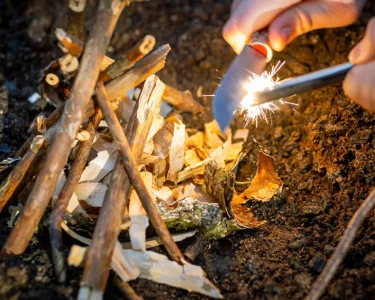
Ferro rods are great for creating sparks, even in wet weather. They generate a shower of hot sparks that can ignite your tinder. While lighter fluid or matches may fail in harsh conditions, a ferro rod is a great backup that you can rely on to get a fire started when you need it. Look for one with a larger surface area, as these will produce more sparks and increase your chances of success. - Guaranteed Tinder
To make sure you can get a fire going, it’s critical to have the right tinder. This could include items like cotton balls soaked in petroleum jelly, fire starter sticks, or fire-starting cubes. The key here is ensuring that your tinder will catch a flame quickly and burn hot enough to ignite larger fuel sources. Many people opt for items like cotton balls because they are compact, easy to store, and ignite quickly. Whether you’re using store-bought products or making your own, always choose dry materials that burn for at least a few minutes to give your fire the best chance of taking hold.
Understanding the Fire Triangle
To successfully start and maintain a fire, it’s important to understand the basic principles that drive fire-building. The three components of fire—heat, fuel, and oxygen—are often referred to as the “fire triangle.” Each part of the triangle plays a crucial role in ensuring your fire can be both started and sustained.
- Heat: This is the initial spark or flame that gets your fire going. Whether you’re using matches, a lighter, or a ferro rod, having a reliable heat source is crucial to starting your fire.
- Fuel: Fuel is anything that burns. In the wild, this could be dry wood, leaves, or other natural materials. In your kit, the focus should be on ensuring that you have quick-burning, dry fuel to transfer the heat from your flame to larger fuel sources.
- Oxygen: Oxygen feeds the fire, helping it grow and maintain itself. It’s important to ensure good airflow around the fire to keep it burning efficiently. The structure of your fire, or “fire lay,” can help with this by creating space for air to circulate. Be mindful not to overload the fire with too much fuel at once, as this can restrict airflow and snuff out the flames.
Additional Tips for Packing Your Fire Kit
While the main components are essential, there are a few additional items you can include to make your fire kit even more effective:
- Waterproof Container: Keep your fire-starting tools in a waterproof container to protect them from moisture. The container should be able to float and remain sealed, keeping your kit dry even if it’s submerged in water. Test the container before you pack it to ensure it keeps everything dry.
- Optional Tools: Some people like to include small items like a bellows for extra airflow, or even a small knife for processing wood or kindling. While not strictly necessary, these can come in handy in certain situations.
How to Use Your Fire Kit
Knowing how to use your fire kit is just as important as having the right tools. Follow these basic steps for a higher chance of success:
- Choose a Safe Location: Find a flat, dry area that’s clear of flammable materials. If the ground is wet, dig a small pit to help contain the fire.
- Gather Fuel: Start by collecting small twigs, leaves, and other dry materials. As your fire grows, you can add larger pieces of wood. If you can’t find small, dry fuel, break or split larger pieces down to size.
- Use Your Fire Starter: Light your tinder using your match, ferro rod, or lighter. Make sure the tinder catches before you add kindling. If the tinder doesn’t ignite immediately, try to process it down to a smaller size or use a different technique.
- Feed the Fire: Once the tinder catches, slowly add larger pieces of wood, leaving space for airflow. Always ensure there’s enough room around the fire for oxygen to circulate.
Final Thoughts
Packing the right fire kit is a vital part of any survival plan. Whether you’re in the wilderness or faced with an unexpected emergency, having a reliable fire kit can help you stay warm, cook food, purify water, and signal for help. While it’s fun to practice different fire-starting techniques, your emergency fire kit should focus on simplicity, reliability, and speed.
By understanding the three components of fire—heat, fuel, and oxygen—and packing your kit with the right tools, you’ll be prepared to handle a variety of situations. Remember, in survival scenarios, less is often more. Focus on quality, reliable items that will work when you need them most.
Be sure to practice using your fire kit regularly, and always test your gear before heading into the field. With a little preparation and the right tools, you’ll be ready for anything nature throws your way.