

 By
By A lighter is a simple tool that many rely on for fire starting, but what happens when it breaks, runs out of fuel, or gets wet? Don’t worry, you can still spark a fire. In this post, we’ll explore how to overcome common lighter malfunctions and maximize its potential, even when it’s not functioning perfectly.
The Pros and Cons of Lighters
Lighters are often the go-to choice for starting a fire because of their ease of use, portability, and quick ignition. However, they do have their limitations. Here’s a breakdown:
Strengths of Lighters:
- Ease of Use: With just a flick of a switch, you can produce a flame almost instantly.
- Quick Flame: Ideal for situations where you need a fire in a hurry.
- Portable: Lighters are small and easy to carry, fitting comfortably in your pocket or fire kit.
Weaknesses of Lighters:
- Breakage: They are fragile and can easily break if dropped or mishandled.
- Limited Fuel: A lighter works only as long as it has fuel, meaning once it runs out, it’s useless.
- Performance in Wet Conditions: Lighters can fail in wet weather, especially when the fuel gets damp.
- Wind: A strong gust can extinguish the flame, making it difficult to light a fire.
- High Elevation: At higher altitudes, the lighter’s flame may be weak or absent due to lower air pressure.
How to Deal with a Broken or Empty Lighter
If your lighter breaks or runs out of fuel, you can still use it to create a fire. Here are a few methods that can help:
1. Use the Ferro Rod Inside the Lighter
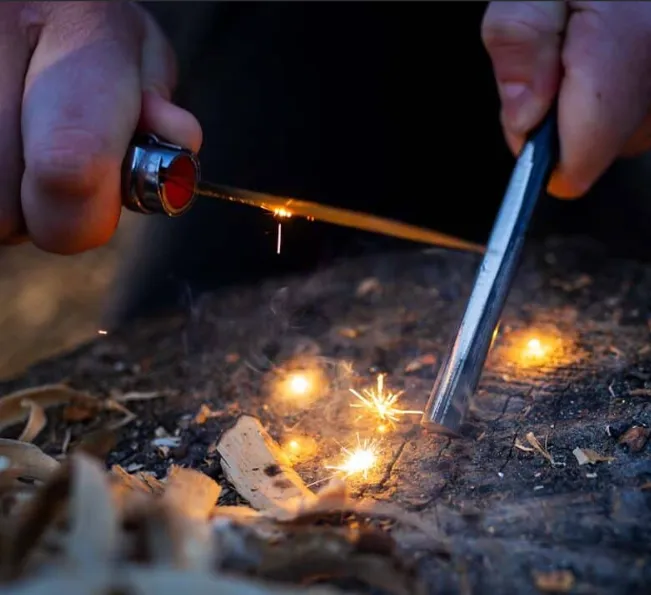
Most lighters contain a small ferro rod inside, which is responsible for creating sparks when struck by the metal wheel. If your lighter is broken or empty, you can remove this ferro rod and use it to start a fire.
Steps:
- Carefully remove the small ferro rod from the broken lighter. Be cautious—this tiny rod can easily be lost.
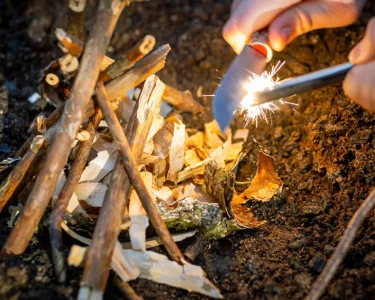
- Once you have the ferro rod, use it to generate sparks onto prepared tinder. The sparks created by the ferro rod are very hot and can easily ignite dry materials like cotton balls, dried grass, or finely processed wood.
2. Using the Striking Wheel
The striking wheel on a lighter creates friction and generates sparks. Even if the lighter no longer produces a flame, the wheel can still be used to create a pile of pyrophoric metal dust, which can catch a spark and ignite your tinder.
Steps:
- Slowly roll the striking wheel on the lighter without striking it. This will create a pile of metal dust inside the metal collar of the lighter.
- Tilt the lighter to allow the dust to fall onto your prepared tinder, which should be dry and finely processed.
- Strike the wheel to release a spark. If you’ve done it right, the spark will ignite the dust and catch onto the tinder, starting a flame.
3. Using a Backup Ferro Rod
If you have a ferro rod in your kit, you can use it instead of relying on a malfunctioning lighter. This method is simple, reliable, and works in any weather condition, including wet environments. Strike the ferro rod against steel to create sparks, which can then be directed onto your tinder.
4. Using Fire Starters with a Broken Lighter
If you have a fire starter in your kit (such as cotton balls soaked in petroleum jelly, magnesium shavings, or fire sticks), you can use your broken lighter to generate enough heat to ignite them. These fire starters catch sparks well and can help you quickly build a fire.
Steps:
- Fluff up your tinder to create a larger surface area for the sparks to catch.
- Strike the broken lighter’s wheel to create sparks, aiming them directly at your prepared tinder.
- Once the tinder catches fire, carefully feed it into your fire lay and build your fire.
5. How to Make Fire with an Empty Lighter
An empty lighter can still be useful. The process is similar to using a broken lighter—take advantage of the spark-producing ferro rod inside.
Steps:
- Remove the striking wheel and ferro rod from the empty lighter.
- Use the ferro rod to create sparks on your prepared tinder.
- With practice, you can generate enough sparks to start a fire, even with an empty lighter.
Handling Wet Lighters
A wet lighter can be a challenge, but it’s not impossible to use. Here’s how to deal with a lighter that’s been submerged in water:
- Shake Out the Water: Hold the lighter upside down and shake it vigorously to remove as much water as possible. Tap it against your palm or on a hard surface to help release any trapped water from the fuel area.
- Dry the Fuel Area: Use your mouth to blow air into the fuel area and remove any lingering moisture.
- Let It Dry: If possible, store the lighter upside down in a warm, dry area (like your pocket) to help it dry out. The heat from your body can speed up the drying process.
- Try Again: Once the lighter has dried, test it. If it doesn’t work, try again using the methods outlined for broken lighters.
Tips for High-Altitude Fires
At higher altitudes, the air is thinner, which can affect how a lighter works. If your lighter produces a weak flame or none at all, you can modify your technique to make the most of it.
Steps:
- Use your knife or another tool to break off the metal collar of the lighter, which will help expose the tiny flame to your tinder more effectively.
- Prepare your tinder well—at high altitudes, it’s even more crucial to process your tinder into small, dry pieces to catch the tiny flame quickly.
- If the lighter fails, switch to using a ferro rod or the broken lighter method to ignite your fire.
Protecting Your Fire-Starting Tools
Prevent issues before they arise by keeping your fire-starting tools in good condition. Here are some tips:
- Store lighters properly: Keep your lighters in a dry, accessible location in your survival kit. If you use disposable lighters, choose brightly colored ones that are easy to find if dropped.
- Maintain your kit: Regularly check the fuel levels in your lighters and replace them when they fall below half full. Carry backup fire-starting tools like matches, a ferro rod, and fire starters to ensure you have multiple options in an emergency.
Conclusion
A lighter is a reliable tool for starting fires, but it’s important to understand how to work around its weaknesses. Whether your lighter is broken, empty, or wet, you can still make it work with a little knowledge and practice. By learning how to use the ferro rod inside, processing your tinder well, and having backup fire-starting methods, you can ensure that you’ll always be able to start a fire when you need it most.