

 By
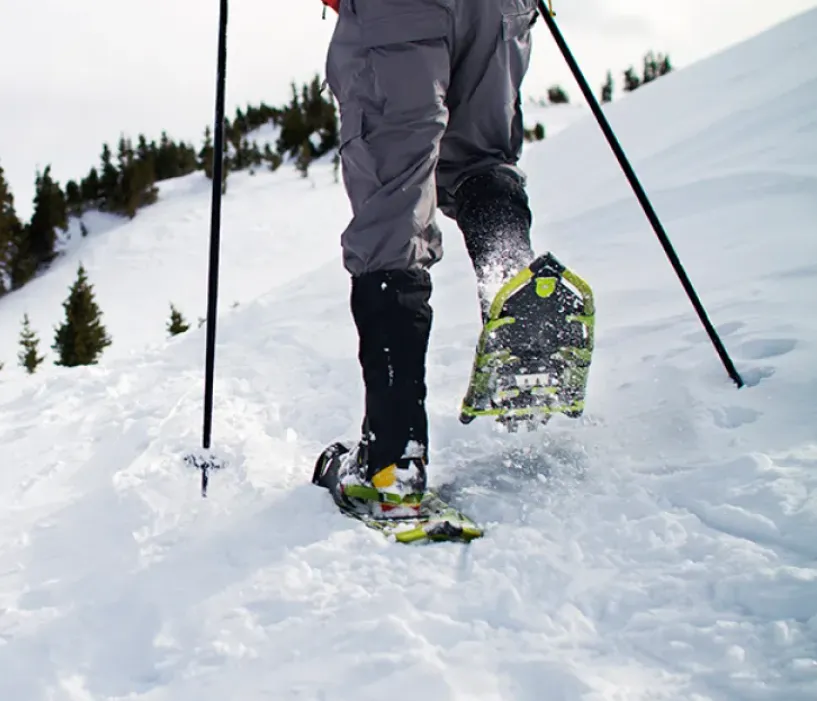
By For over two decades, I’ve explored countless trails across the western United States, testing snowshoes through deep powder, icy slopes, and rugged backcountry terrain. Over the years, I’ve refined my approach to selecting the best snowshoes—evaluating everything from performance and design to comfort and ease of use. After extensive field testing with a team of experienced hikers and snowshoe enthusiasts, I’ve narrowed down the top models that deliver the most reliable performance in every condition.
Ease of Use
The first thing to consider in a snowshoe is how easily you can get it on and off, especially in harsh weather. When it’s windy and freezing, you don’t want to remove your gloves just to adjust a strap. Among the models tested, the MSR Lightning Ascents stood out for their glove-friendly bindings and quick adjustment system. Even after hours in snowy terrain, they resisted ice buildup remarkably well.
The Tubbs Mountaineers also impressed us with their user-friendly bindings, though we did notice minor icing issues in extreme cold. The Crescent Moon models featured a simple hook-and-loop system that worked great in dry snow, but heavy buildup occasionally interfered with secure fastening.
Binding Support and Stability
Ease of use doesn’t mean much without solid support. The Lightning Ascents again led the way with a four-strap system that fit snugly without pinching. They held steady on steep climbs, fast descents, and tricky traverses alike. The Tubbs Mountaineers followed closely, offering dependable stability except for slight heel slippage in steep traverses by heavier hikers. Other models tested performed adequately but couldn’t match the control and comfort of these two top contenders.
Performance on Technical Terrain
To truly evaluate snowshoes, we tested them on icy ridges, mountain slopes, and compact snowfields. Every model handled flat terrain well, but steep inclines and crusty snow separated the best from the rest. The MSR Lightning Ascents delivered unbeatable traction thanks to their aggressive crampon system that extends across the entire frame. They gripped firmly uphill, downhill, and even across near-vertical slopes.
At a more affordable price, the L.L. Bean Winter Walkers performed admirably in this category, with simple yet effective cleats and bindings that provided reliable traction. Other brands like Atlas and Crescent Moon scored slightly above average but lacked the biting grip of the MSRs.
Comfort and Natural Stride
A snowshoe should allow you to walk as naturally as possible. The Crescent Moon EVA All-Foams, Atlas Spindrifts, and MSR Lightning Ascents were the most comfortable for long treks, allowing a smooth, fluid stride. Their tapered tails and narrow decks minimized awkward side-stepping and fatigue. Even the bulkier Tubbs Mountaineers, despite a wider footprint, offered a stable and reasonably natural gait.
Flotation in Deep Snow
Flotation—the ability to stay on top of soft powder—is where wider decks shine. The Tubbs Mountaineers provided the best flotation, keeping us high on even the fluffiest snow. MSR and Crescent Moon shoes offered above-average flotation, while the lightweight Atlas Spindrifts sank a bit deeper, trading surface area for agility.
Final Verdict
After months of fieldwork across six western states, the MSR Lightning Ascents earned the top spot as the most versatile and dependable all-mountain snowshoe. They excelled in traction, ease of use, and comfort, making them an ideal choice for serious winter adventurers. However, each model we tested has strengths suited to different needs. For example, the Crescent Moon EVA All-Foams are great for beginners, while the Atlas Spindrifts cater to fast-moving hikers.
Before buying, consider your primary use. Will you explore gentle meadows with family, tackle mountain ascents, or embark on overnight expeditions? Your intended terrain, snow type, and pack weight will determine the best fit and size.
Understanding Snowshoe Design
Modern snowshoes consist of three main parts: frames and decking, bindings, and traction systems. Traditional wooden frames have been replaced by aluminum or injection-molded plastic for lighter weight and better performance. Decking materials vary from durable synthetics to flexible rubbers, all designed to provide floatation while minimizing snow buildup.
Bindings secure your boots to the snowshoes and must balance comfort with control. Some models feature advanced tightening systems like the Boa dial, while others rely on simple straps and buckles. Try different options with the boots you plan to wear, as not every binding fits every boot size or shape.
Traction elements—such as crampons and cleats—prevent slipping on icy slopes. Ideally, snowshoes should have teeth under both the toe and heel, ensuring grip in any direction. The more aggressive the traction system, the better your stability on technical terrain.
Comfort and Fit
A proper fit is essential for a safe and enjoyable snowshoeing experience. Bindings should hold your feet snugly without restricting circulation. Always test snowshoes with gloves on, mimicking real conditions, and check for potential ice buildup in straps or buckles.
Choosing the Right Size
Snowshoe size depends on your weight, including your gear, and the snow density where you’ll hike. Denser snow requires less flotation, while soft powder demands larger frames. For example, a 24-inch snowshoe may suffice in the Cascades, but deep Rocky Mountain powder might require a 30-inch version.
The Joy of Snowshoeing
Snowshoeing is one of the oldest and most accessible ways to explore winter landscapes. With modern designs offering exceptional comfort and control, it’s easier than ever to enjoy the peace and beauty of snow-covered trails. Whether you’re a casual hiker or a backcountry explorer, investing in the right pair of snowshoes opens up a world of year-round adventure.