

 By
By Mount Shuksan is one of the most photographed peaks in the Pacific Northwest and an absolute gem for mountaineers seeking a challenging and varied climb. From rugged scrambling to glacier travel, the Fisher Chimneys route offers an adventurous and less-crowded alternative to the standard Sulphide Glacier route. Here’s a detailed look at what to expect, how to prepare, and what it’s like to experience this classic North Cascades climb.
Why Choose the Fisher Chimneys Route
The Fisher Chimneys route has it all—complex navigation, airy scrambling, and scenic glacier crossings—all with far fewer people than the standard path. It’s a technical yet rewarding line that feels wild and immersive from start to finish. Expect long days, steep snow, and a summit block that demands focus and finesse.
For my partner and me, this climb doubled as an anniversary adventure and our second time roped together on a glacier. The route tested not only our fitness and skills but also our communication—an essential part of climbing as a team.
Key Details About Mount Shuksan
- Elevation: 9,131 feet
- First Ascent: 1906, by Asahel Curtis and W. Montelius Price
- Location: North Cascades National Park
- Ancestral Lands: Nlaka’pamux, Puget Sound Salish, and Nooksack Peoples
Route Overview
The Fisher Chimneys route is a blend of 3rd- and 4th-class scrambling, glacier travel, and snow climbing. Depending on the season, sections such as Winnie’s Slide and Hell’s Highway can turn icy and may require ice protection. Expect a long day on your summit push—typically 12 to 15 hours round trip from camp.
Basic Stats:
- Distance: 14.4 miles round trip
- Elevation gain: ~6,600 feet
- Typical time: 10–15 hours of moving time
Camping Options
Most climbers choose between Lake Ann or higher camps along the route. Lake Ann, at 4,700 feet, offers stunning views and a comfortable approach for those who prefer a more relaxed schedule. Higher camps—such as those above the first chimney (5,650 ft), below Winnie’s Slide (6,900 ft), or just above it (7,050 ft)—shorten summit day but mean carrying a heavier pack on technical ground.
We opted for Lake Ann, which kept the Fisher Chimneys climb lighter and gave us a peaceful basecamp with unbeatable views.
The Climb: Step by Step
Lake Ann Approach
From the trailhead, descend through forested terrain before gradually climbing toward open meadows and Lake Ann. It’s about a two-hour hike to camp with stunning views of Shuksan’s rugged profile along the way.
The Fisher Chimneys
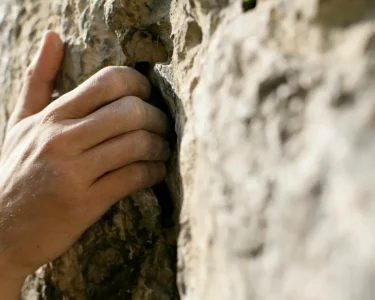
We started early, around 4 a.m., reaching the base of the Chimneys two hours later. The lower section involves 3rd- and 4th-class scrambling on solid rock. Staying in the main gullies helps with route finding. Look for fixed slings that mark common belay or rappel points for the descent. The hardest moves are near the base, especially in stiff mountaineering boots.
Winnie’s Slide
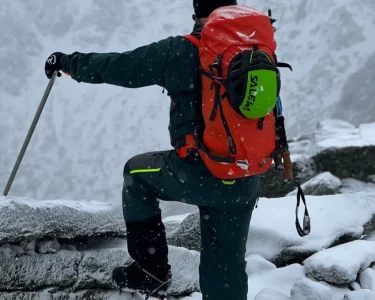
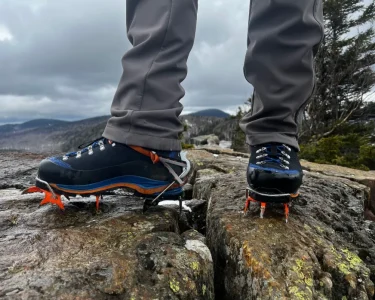
Topping out of the Chimneys leads you onto the White Salmon Glacier. This is where you’ll strap on crampons. Early in the season, the snow is soft enough for easy travel, but late-summer climbers should bring an ice screw or two for protection. This section leads to a flat area suitable for a higher camp.
Upper Curtis Glacier and Hell’s Highway
Above Winnie’s Slide, you’ll find running water for refills before roping up for glacier travel. The Upper Curtis Glacier starts steep before mellowing out and dropping to the traverse known as Hell’s Highway—a steep ramp that connects to the Sulphide Glacier. Depending on the season, it can resemble a steep snow slope or a narrow icy corridor. A firm boot pack usually helps with footing, but caution is key.
The Sulphide Glacier and Summit Pyramid
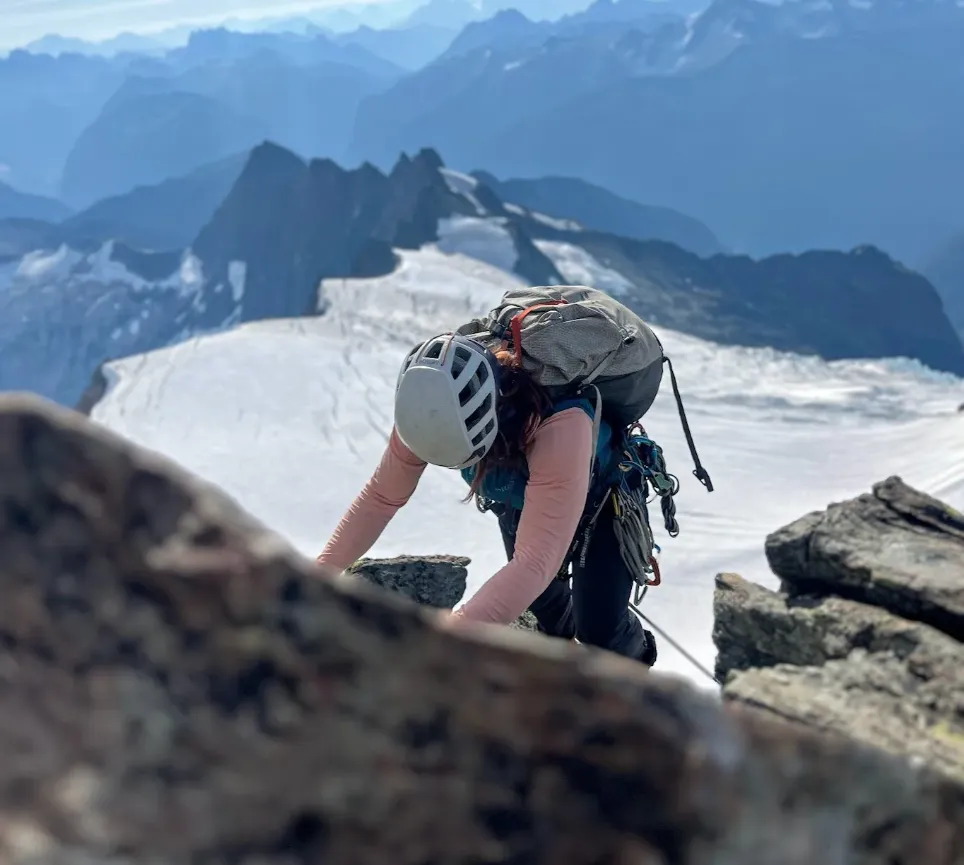
Once on the Sulphide, you’ll merge with the standard route, weaving around crevasses toward the summit pyramid. Leave crampons and axes at the base before tackling the 3rd- and 4th-class scramble to the top. Those seeking a technical variation can climb the Southeast Rib (5th class).
We reached the summit around 10:30 a.m.—rewarded with 360-degree views of the North Cascades and Mount Baker gleaming nearby.
The Descent
Most parties downclimb the pyramid, using fixed rappel anchors where necessary. Always inspect existing webbing before committing to it. Traffic can cause bottlenecks here, so patience helps—especially if multiple groups are descending at once.
We descended the same way we came, taking care on the steep snow of Hell’s Highway and Winnie’s Slide. Both required deliberate downclimbing in firm conditions. Once back at the Fisher Chimneys, we downclimbed most of the way but chose to rappel two sections for safety. From there, it was a smooth hike back to Lake Ann, where we arrived just before evening—tired, sunburned, and incredibly content after a 13-hour day.
Tips for Success
- Start early: The route is long, and travel times can easily exceed expectations.
- Stay efficient: Keep transitions smooth between scrambling, roping up, and crampon use.
- Assess the season: Late summer often means more ice on Winnie’s Slide and Hell’s Highway.
- Bring the right tools: A light rope, a few pickets or screws, and reliable glacier gear are essential.
- Watch for rockfall: Especially in the Chimneys—helmets are a must.
Final Thoughts
Climbing Mount Shuksan via the Fisher Chimneys route is one of the most rewarding alpine adventures in the Cascades. The route combines beauty, challenge, and variety—moving seamlessly from rock to glacier to summit scramble. It’s a climb that demands focus but offers incredible satisfaction for those ready to take it on. As we watched the sunset from Lake Ann that evening, I couldn’t imagine a better way to celebrate our anniversary—or a better mountain to remind us why we climb.