

 By
By Anyone who’s spent time in the mountains knows that sharp tools are your best allies. Whether you’re swinging an ice axe into a frozen wall or kicking your crampons into hard ice, those metal points are what keep you secure. Over time, though, even the best equipment dulls—and a dull tool can turn a safe climb into a dangerous one. Learning how to properly maintain and sharpen your gear isn’t just about performance; it’s about safety.
Finding the Right Edge
Not all climbing calls for razor-sharp points. The level of sharpness depends on the terrain and the type of climbing you’re tackling. For steep, technical ice routes where precise placement matters, you’ll want your axe and crampons honed to fine points. But for general mountaineering, where you’re often walking on mixed rock and snow, overly sharp spikes can wear down faster—or even cause injuries during self-arrest. The goal is functionality, not knife-like sharpness.
Sharpening Your Ice Axe
What You’ll Need:
- A medium-cut metal file
- A vice (optional but helpful)
How to Do It:
Secure your ice axe in a vice with the pick facing upward. If you don’t have a vice, brace it carefully against a solid surface or across your legs. Work with controlled, single-direction strokes using your file—never saw back and forth. Follow the original angles of the teeth and focus your efforts on restoring the tip, as that’s where the tool does the most work.
Avoid over-sharpening. For general mountaineering axes, there’s no need to refine the spike at the bottom of the shaft—it’s designed to penetrate snow, not ice. A needle-sharp point here could actually be dangerous, especially when practicing self-arrest techniques.
Sharpening Your Crampons
What You’ll Need:
- A medium-cut file
- A vice
- Small wooden blocks for support
How to Do It:
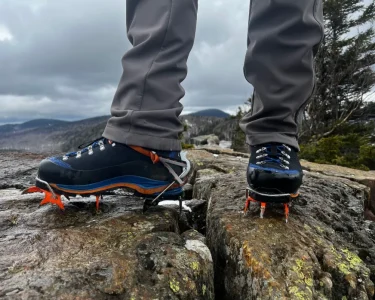
Place your crampons in the vice with a wooden block between the spikes and the vice jaws to protect the frame. Clamp lightly—too much pressure could distort the shape. Using smooth, forward strokes, file the front points and the secondary spikes behind them, keeping the natural bevels intact.
Unless the other points are extremely dull, there’s no need to sharpen every spike. The front and secondary points take the most abuse, bearing the bulk of your weight on steep slopes, and these are the ones that need regular attention.
A Few Final Tips
- Always sharpen in one direction to maintain the factory edge and avoid creating weak spots.
- After sharpening, check for burrs and gently remove them with light file strokes.
- Keep your tools dry and clean when storing them—moisture and rust will undo your hard work.
Regular maintenance doesn’t take long but pays off tenfold in the mountains. Sharp, well-cared-for gear means better grip, smoother movement, and fewer surprises when conditions get tough. The next time you gear up for a climb, take a few extra minutes to give your axe and crampons the attention they deserve. Your safety—and your summit—depend on it.