

 By
By Indoor rock climbing has become more popular than ever, with many new gyms popping up all over. As a seasoned climber, I often get asked by friends, “You climb? I want to learn!” While rock climbing is an exciting and rewarding sport, it can also be risky. Having a basic understanding of the essentials can make all the difference in keeping things safe and fun. If you’re thinking of introducing a friend to climbing, here’s a simple guide to help you teach them the ropes—literally.
1. Ask About Their Experience
Before heading to the gym, get a sense of your friend’s climbing background. Knowing their level of experience will help you determine where to start. Ask the following questions:
- Have you ever climbed before? If yes, was it indoors or outdoors? What difficulty level were you comfortable with?
- Do you have your own climbing shoes and harness?
- Are you familiar with belaying? (Many gyms require a belay test before you can use the ropes.)
- Do you know how to tie the figure-eight knot?
These questions will give you a clearer picture of how to proceed.
2. Start at a Climbing Gym
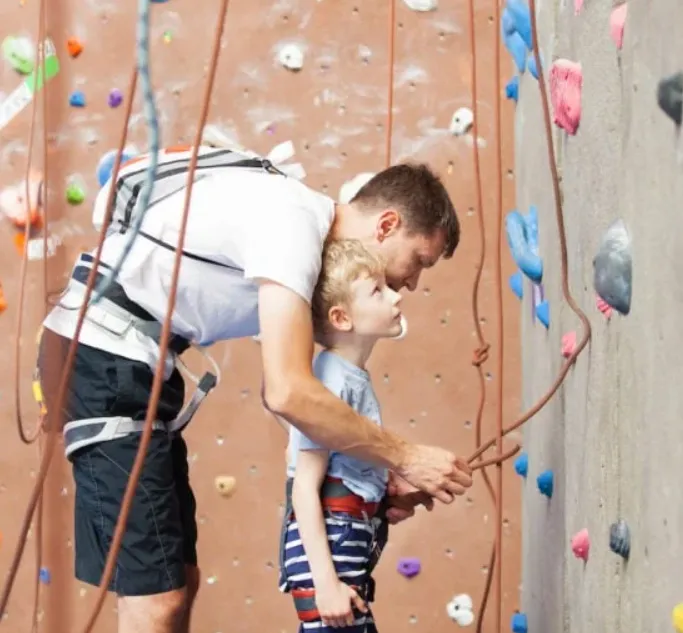
It’s best to begin in a climbing gym, where the environment is controlled, and instructors are available. Many gyms offer classes for beginners, and the instructors are trained to teach proper techniques and ensure safety. While it may cost a bit to join a class, it’s a worthwhile investment to learn the correct methods, especially when it comes to belaying and harnessing. Most gyms also require you to pass a belay test before you can climb with a rope.
3. Explain the Climbing Grade System
The grading system for climbs might be confusing for a first-timer. Generally, the lower the number following the “5,” the easier the climb. Some gyms use letter grades, like “5.10,” or include plus or minus signs to indicate difficulty. For instance, a “5.10+” would be harder than a “5.10” and a “5.10a” is easier than a “5.10d.” Take time to explain these to your friend so they understand the difficulty levels when choosing a route.
4. Emphasize the Importance of Warming Up
It might seem tempting to jump straight into the climbing, but it’s crucial to warm up first. Make sure your friend understands why warming up is essential, especially for finger muscles, which are heavily engaged in climbing. A light warm-up could involve climbing a few easy routes to get the blood flowing before tackling anything challenging. Warming up reduces the risk of injury and helps improve performance. If you haven’t climbed in a while, focus on endurance and do multiple repetitions to ease back into it.
5. Start with Climbing Before Adding Complexity
While learning belaying and knot-tying is essential, it might be overwhelming for a beginner to tackle everything at once. Consider bringing another friend who’s already familiar with belaying to help or, better yet, start with bouldering. Bouldering involves shorter climbs without ropes, so there’s no need for belaying or harnesses. This way, your friend can focus on the climbing itself before adding other elements like belaying and knotting.
6. Show Proper Technique
As you climb, take time to demonstrate proper technique. Focus on balance and efficient footwork, as these are the foundations of good climbing. It’s easy for beginners to rely too much on upper body strength, but proper foot placement is key to making climbs easier. You might want to use terms from other activities they’re familiar with (such as yoga) to help them understand the movements. Explaining how to trust small holds and shift weight onto the feet can make climbing feel less intimidating.
7. Observe and Adjust
Keep an eye on your friend’s progress as they climb. Notice their body movements, how they handle the height, and their emotional comfort level. If they seem nervous about heights, it may be a good idea to stick with indoor climbing and work through the routes with color-coded holds before introducing outdoor climbing. It’s important to practice indoors and gain confidence before adding the challenges of outdoor climbs.
Final Thoughts
Teaching a friend to rock climb can be a rewarding experience for both of you. It’s not just about showing them how to scale a wall—it’s about fostering a love for the sport and creating lasting memories. Keep the experience fun and safe, and encourage them to keep practicing. Soon enough, they’ll be climbing confidently on their own!