

 By
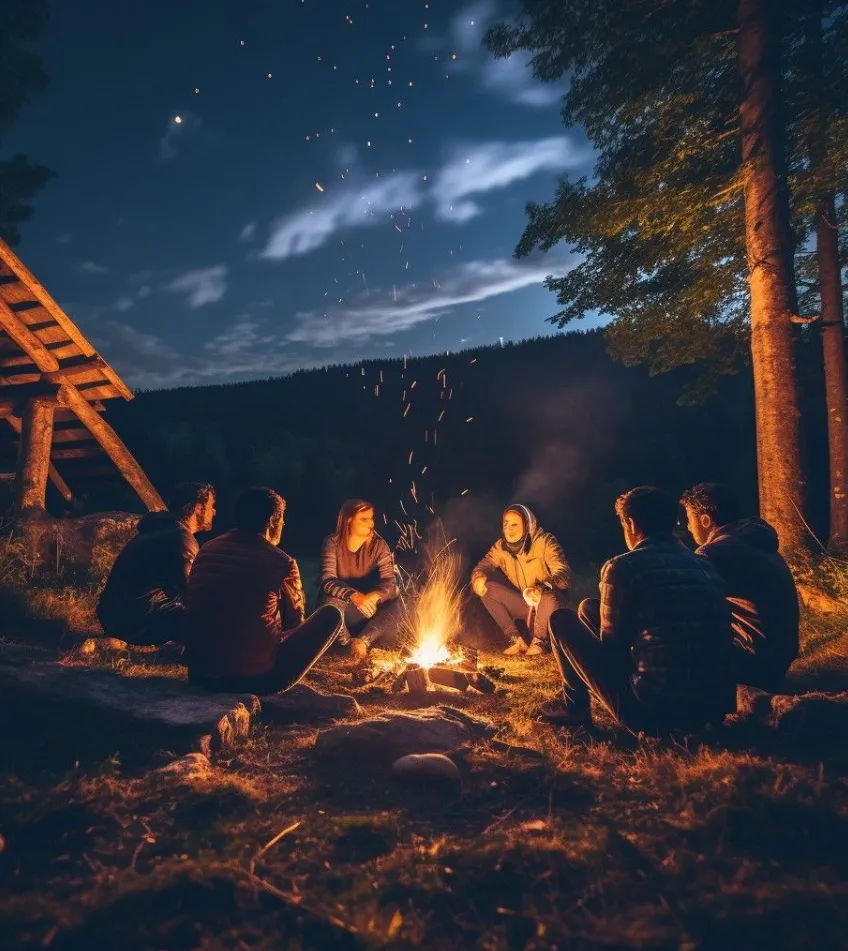
By A well-told story often begins with the warmth and crackling of a campfire. Picture this: a group of friends gathered in the woods, setting up camp, preparing dinner over an open flame, and sitting together under a starlit sky. The fire flickers and crackles as one friend, an expert storyteller, spins a tale of a dragon living high in the mountains. The group listens intently, captivated by the story of the dragon’s fiery breath and treasure hoard.
As the storyteller reaches the dramatic part of the story, a log shifts in the campfire, sending sparks flying. The group jumps, startled for a second, but then laughs as they realize it was just the fire. With a mischievous grin, one friend suggests, “What if the dragon came down from the mountains right now?” The group falls silent, imagining the fearsome creature. But then another friend humorously responds, “Nah, he wouldn’t want to leave his treasure behind.” With that, the group settles back into their comfortable rhythm, telling jokes and stories as they toast marshmallows and enjoy each other’s company.
This scene reminds us of the many ways a campfire can enrich our experiences. Beyond providing a place to gather and tell stories, fire is essential for warmth, cooking, signaling for help, and even providing a sense of security. The ability to make fire efficiently and reliably is a key survival skill—and one of the most rewarding to master.
The Fundamentals of Fire Building
To start a fire, it’s important to understand the science behind it. Fire requires three elements: fuel, heat, and oxygen. These three components form the fire triangle. A fourth element, chemical chain reactions, completes the process, forming what’s known as the fire tetrahedron. When heat reaches the ignition point of the fuel, it vaporizes, mixing with the oxygen in the air to produce a reaction called oxidation. This generates heat and light, which sustains the fire. When any of the elements—fuel, heat, or oxygen—are removed, the fire will extinguish.
The Anatomy of a Fire Lay
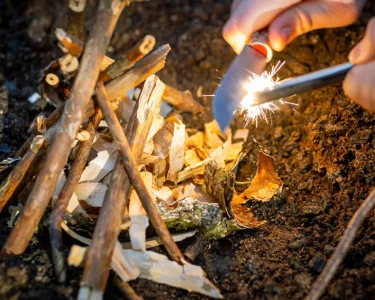
Building a fire is not just about lighting a match and hoping for the best. The way you arrange your fuel is crucial. The first step is to gather tinder, which is fine, dry material that ignites quickly. Common tinder includes dry grass, bark, cotton balls, or any fibrous material that can catch a spark. Once your tinder is lit, you need kindling, which are small sticks that burn more slowly. Kindling should be about the thickness of a pencil or smaller.
The key is to start small and gradually build your fire, moving from tinder to kindling and then to larger logs as the fire gains strength. This process ensures a steady build-up of heat and allows the fire to grow.
Common Mistakes in Fire Building
Over the years, I’ve taught many people how to start fires, and one of the most common mistakes I see is overloading the fire with too much kindling too quickly. This can smother the fire and deplete the oxygen needed for combustion. Additionally, people tend to organize their fuel too neatly, creating tight, uniform stacks of kindling that restrict airflow. Remember: Fire loves chaos! For a successful fire, leave gaps in the kindling to allow air to flow freely. Keep the pieces long, and let the fire build naturally.
Another common mistake is blowing on a small flame in an attempt to make it grow. While it may seem like a good idea, blowing too hard or too soon can extinguish the fire before it has a chance to grow. Instead, let the fire develop its own heat, adding fuel as needed without disrupting the delicate balance.
Gather Enough Materials
One mistake many beginners make is not gathering enough tinder and kindling before attempting to start the fire. In survival situations, it’s important to collect more than you think you’ll need. A good rule of thumb is to have enough tinder to form a ball about the size of a basketball. When you’re ready to ignite it, fluff up the tinder to create air pockets, which will help the fire catch more easily. Similarly, collect enough kindling to fill your arms or a decent-sized bag. Don’t just gather a small handful—ensure you have ample fuel to maintain the fire once it starts.
Building the Big Fire
Once you’ve got your tinder and kindling set, it’s time to think bigger. Gather larger logs—preferably thumb-sized up to wrist-sized—before adding them to your fire. Don’t cut them into short pieces. As long as you’re in a safe area, there’s no reason to chop your wood into small chunks. Keep the logs long and let the fire do the work. The heat from the smaller sticks will eventually ignite the larger logs, allowing you to keep the fire going for a longer period of time.
Different Fire Lays
There are various fire lays, each suited for different needs. Here are a few common ones:
Lean-to Fire Lay
This is a simple, effective method, especially useful in windy conditions. To build a lean-to fire lay, place a large log or rock on the ground. This will serve as a base to shelter your fire from the wind. Next, create a bundle of tinder and place it beside the log or rock. Once it ignites, lean kindling against the structure, building a shelter over the flames. Continue feeding small amounts of tinder and kindling to keep the fire alive, adding more fuel as necessary.
Teepee Fire Lay
A classic fire lay that forms a conical structure with kindling and tinder. To build it, arrange your kindling in the shape of a teepee, with the smaller twigs and dry grass in the center. Light the tinder, and the fire will gradually burn upwards, igniting the surrounding kindling. This method is good for quick ignition but can be tricky if the structure isn’t built properly.
Log Cabin Fire Lay
A more stable fire lay, ideal for longer fires. To create this lay, start with a teepee of tinder and kindling and then surround it with larger logs arranged in a log cabin structure. This design allows for good airflow and helps sustain the fire for an extended period. For a faster, hotter fire, use smaller logs and split them to create more surface area.
Upside-Down Fire Lay
This method burns fuel from the top down and is great for overnight fires. To build it, stack larger logs in a square pattern, and then create smaller layers on top. Adding mud between the logs can slow the burn and keep the fire burning steadily throughout the night.
Banking Your Fire
When you need to preserve a fire without burning all your fuel, try banking it. This technique involves covering the coals and ashes with dirt or sand, reducing oxygen flow and slowing the burn. It’s a great way to ensure your fire will be ready to rekindle the next day.
Final Thoughts
Building a fire is a skill that takes practice, but with the right knowledge and technique, you can easily master it. Whether you’re telling stories around the campfire or relying on it for warmth and cooking, a fire can be the heart of your outdoor experience. Remember, the key to a great fire lies in the materials you gather, the way you arrange them, and your patience to let the flames grow.