

 By
By If you plan to evacuate on short notice, your pack should be tailored to your body, destination, and the time you expect to be on the move. Start with a clear plan: where will you go, how will you get there, and what resources (if any) are waiting for you at that location? Your answers will determine what to carry and what you can leave behind.
HOW MUCH WEIGHT TO CARRY
Be realistic about how much you can haul. A general guideline used by outdoor enthusiasts is to carry roughly 20% of your body weight if you’re in average shape. If you’re fit, you might handle closer to 25%, and those who are very well conditioned sometimes carry up to 35%. Adjust your load to your endurance and the distance you anticipate traveling.
CHOOSING THE RIGHT PACK
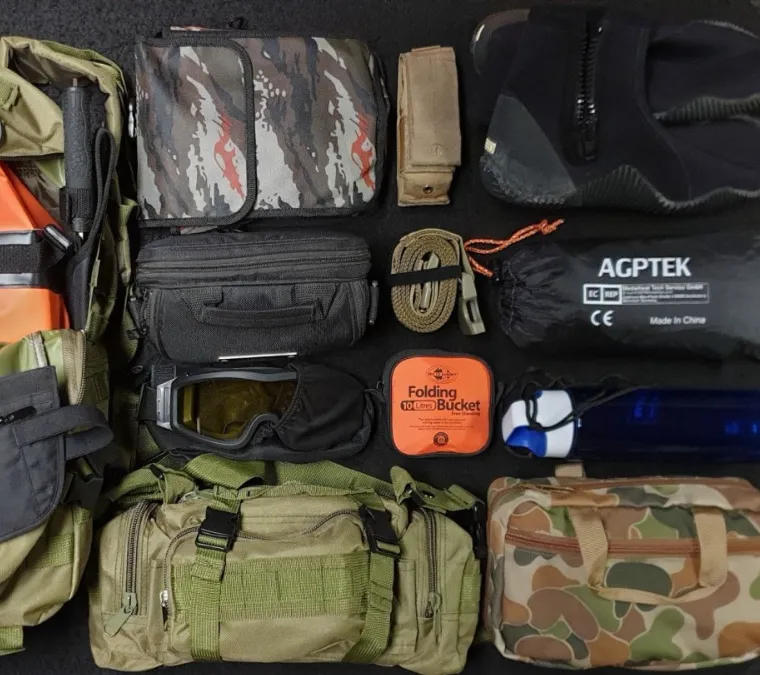
A durable, comfortable bag is essential. Don’t rely on cheap school backpacks — straps can fail and zippers break when you need them most. Look for a pack with a supportive hip belt, padded shoulder straps, multiple compartments, sturdy zippers, and a sleeve for a hydration reservoir. For urban evacuations, avoid obvious military camouflage and overly bright colors that attract attention. Subtle earth tones like khaki, coyote brown, or black are practical choices. Consider a small waist pack for items you need fast access to, like documents, a flashlight, or a multitool.
ROUTINE MAINTENANCE
Pack assembly is only the beginning. Test every item, know how to use it, and cycle consumables every few months. Repack periodically to replace expired food, worn-out sealants, or batteries. Practice essential skills—lighting a fire, using a water filter, and basic first aid—so you aren’t learning under pressure.
SURVIVAL PRIORITIES
When deciding what to include, think in terms of immediate survival priorities. Short rules of thumb help keep your list focused:
• Minutes: life-saving airway or respiratory protection in contaminated environments.
• Hours: protection from exposure — clothing, shelter, and the ability to make fire.
• Days: access to safe drinking water.
• Weeks: food and tools to acquire, prepare, or hunt food.
FIRST AID KIT BASICS
Build a kit that meets your medical knowledge level. If you lack formal training, keep to basic items and consider taking a first-aid course. Elements to include:
Medication: any prescription medicines, pain relievers, antihistamines, anti-diarrheal, electrolyte tablets, and multivitamins. If you have severe allergies, pack an epinephrine injector.
Dressings and bandages: adhesive bandages, sterile gauze, medical tape, trauma dressings, and a triangular bandage for slings.
Tools and consumables: disposable gloves, tweezers, antiseptic wipes, eye wash, adhesive wound closure strips, and EMT scissors.
Advanced options (for trained users): a tourniquet, hemostatic agents, Israeli dressing, suture kit, and splinting material.
Note: household items like tampons are not sterile medical dressings; use properly manufactured wound-care supplies to reduce infection risk.
PROTECTION FROM THE ELEMENTS
Exposure can be deadly. Prioritize layered clothing and lightweight shelter gear appropriate for your climate.
Head and neck: wool cap, sun hat or boonie, bandana, and sunglasses.
Upper body: moisture-wicking base layers, insulating mid-layers, and a water-resistant outer shell with a hood.
Hands and feet: durable gloves, liner gloves, moisture-wicking socks, wool socks, and sturdy hiking boots. Consider lightweight water-shoes for river crossings.
Shelter: a compact tent or tarp, bivy sack or lightweight sleeping bag, insulating pad, and space blankets for emergency warmth. Mylar blankets are tiny and light — useful as backups but not ideal as a primary shelter.
FIRECRAFT
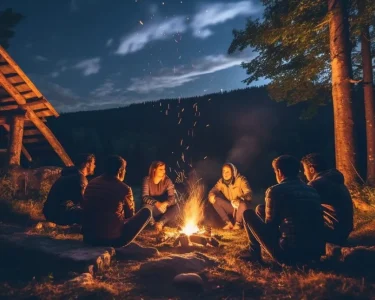
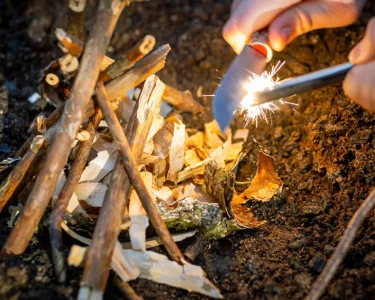
Fire provides warmth, signals, and a way to purify water and cook food. Carry multiple fire-starting methods and reliable tinder.
Fire tools: ferrocerium rod, stormproof matches, a dependable lighter, and a backup lighter or flint. Avoid single-use gimmicks as your sole method; choose redundancy.
Tinder: petroleum-coated cotton balls, commercial tinder tabs, or char cloth. Prepare a few sealed bundles for quick use.
WATER
Water is critical. Boiling is the simplest way to sanitize water, and filtering removes particulate matter. Ideally, combine filtration and purification tablets as a backup.
Carry: a durable water bottle or wide-mouth container, a compact metal pot for boiling, a small stove if desired, purification tablets, and a portable filter (e.g., inline or pump-style). Bring a hydration bladder if you prefer, but add an inline filter to reduce plastic taste and contamination risks.
FOOD AND SUSTAINED ENERGY
Food choices depend on weight, calories, and preparation needs. High-calorie ration bars, dehydrated meals, energy bars, trail mix, and jerky are compact and long-lasting. Include comfort items (coffee, instant cocoa) to maintain morale.
Suggested staples: long-lasting emergency rations plus several days’ worth of dehydrated meals and easy-to-prepare foods like oatmeal packets. Pack a lightweight cooking pot and basic seasonings if space allows.
TOOLS FOR FOOD PROCUREMENT
Bring a reliable fixed-blade knife, a folding knife, and sharpening tools. Include basic hunting and fishing gear: fishing line, hooks, a small rod or survival kit, snare wire, and at least 20 feet of cordage for traps or snares. A small, lightweight firearm can be appropriate for hunting in some situations, paired with a cleaning kit and spare ammunition; if you choose to carry a firearm, make sure you’re legally allowed and trained to use it safely.
ESSENTIAL TOOLS
Versatile tools make many tasks possible. Consider:
Cutting tools: hatchet, machete, or tactical tomahawk; folding saw; hand shovel.
Multitools: a Leatherman-style tool covers many small repairs.
Fasteners: paracord (100 feet or more), duct tape, zip ties, and carabiners.
Repair items: needle and heavy-duty thread, spare shoelaces, and a small file or whetstone.
NAVIGATION AND COMMUNICATION
Know where you’re going and how to call for help.
Navigation: map and compass, and know how to use them. Don’t rely exclusively on electronics.
Lighting: headlamp, compact flashlight, and a hand-crank or dynamo light as a battery-free backup.
Communication: a small battery-powered or hand-crank radio to receive updates, two-way radios for short-range contact, and emergency signaling tools like a whistle and mirror.
SANITATION AND HYGIENE
Pack lightweight personal hygiene items that also serve survival uses.
Include: toilet paper, hand sanitizer, a small towel or washcloth, soap, toothbrush and toothpaste, feminine supplies, and a few trash bags for waste management or emergency shelter. Sanitation supplies prevent disease and maintain comfort.
DOCUMENTS AND MONEY
Keep copies of identification and important paperwork sealed in a waterproof pouch: driver’s license, passports, insurance cards, property deeds, and emergency contact information. A small amount of cash in small bills may be useful where electronic payments fail.
MISCELLANEOUS, BUT USEFUL
A few extra items can be surprisingly helpful: sunscreen, insect repellent, a small notebook and pencil, spare batteries, emergency light sticks, a pair of binoculars, and a compact survival guide or field manual specific to your region. Also include a basic sewing kit and repair tape.
FINAL TIPS
• Pack light but smart: redundancy for critical items, but avoid unnecessary weight.
• Train with your gear so it becomes second nature.
• Tailor the contents to your climate, family needs, and evacuation plan.
• Rotate perishable items and check seals and batteries on a regular schedule.
When assembled thoughtfully and practiced with regularly, your bug-out bag becomes more than a collection of gear — it’s a portable plan that protects you and your loved ones when the unexpected happens.