

 By
By Navigation is more than just a hobby. It’s a vital skill for outdoor adventurers, survivalists, and even professionals like search-and-rescue teams. While activities like orienteering and geocaching offer fun and adventure, mastering real-world navigation techniques can mean the difference between life and death in the wilderness.
Orienteering: A Competitive Take on Navigation
Orienteering is a sport where participants use maps and compasses to navigate through varying terrains and race against the clock. While it’s an exciting and physically challenging activity, it’s important to recognize that orienteering is still just a game. It’s about following set checkpoints along a marked course—ideal for training and competition, but not for real-world survival situations.
The distinction between orienteering as a sport and navigation as a survival skill became evident when a competitive orienteering team came to The Survival University (TSU) for advanced navigation training. Despite years of practice, they were always a step behind the top team. After enrolling in TSU’s Basic and Advanced Navigation Courses, the team honed their skills beyond the game and took first place in their next competition. How? By learning to truly understand the land—not just following a set route but interpreting terrain, adjusting for declination, and mastering unmarked landscapes.
True navigation goes beyond the theory and structure of orienteering. It’s about adaptability, making real-time decisions, and understanding the environment in a way that orienteering courses don’t require. In survival scenarios, knowing how to navigate rugged terrain or unexpected challenges is essential.
Geocaching and GPS: The Thrill of a Treasure Hunt
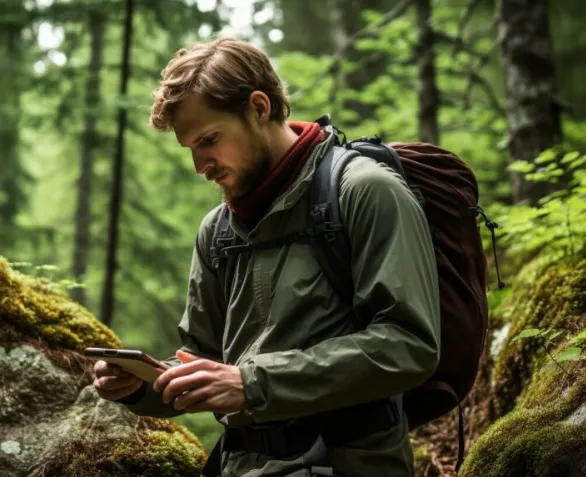
Geocaching brings a modern twist to traditional navigation. Using GPS coordinates, participants hunt for hidden caches in various locations. While it’s a great way to explore nature and practice basic navigation, geocaching relies heavily on GPS technology. The thrill of finding a hidden treasure is only possible as long as your GPS works properly—but what happens when you’re in areas with weak or no signal?
This is where real navigation skills separate the casual hobbyists from seasoned navigators. Imagine geocaching in a remote forest or canyon where your GPS falters or leads you astray. Being able to read the land using a compass, measure your pace, and apply terrain association will ensure you stay on track even when technology fails. Understanding these skills can help you pinpoint your target with precision—saving you time and energy.
Taking Navigation to the Next Level at TSU
At TSU, we offer two comprehensive navigation courses each year. These aren’t just basic map-reading sessions; our training mirrors the real-world needs of military units, SAR teams, and recreational adventurers alike.
- Mountain Location (3-Day Standard Navigation Course): Held in a 1,000-acre valley, this course teaches beginners and intermediate navigators the essentials of topographic map reading, compass use, and navigation through dense terrain.
- Chapman Ranch (Advanced Navigation Course): A 4,000-acre ranch surrounded by vast public land, this is where students take their navigation skills to the next level. Students face real-world challenges, including terrain association, route planning, and navigating difficult landscapes.
These courses are designed for everyone—from those who want to master the outdoors to those preparing for specific challenges, like SAR or military training. Whether you love orienteering or geocaching, this is where you’ll level up your skills.
Why Real Navigation Skills Matter
Whether you’re into orienteering, geocaching, or hiking off the beaten path, real navigation skills are indispensable. The wilderness is full of natural landmarks—mountains, rivers, ridgelines, and valleys—but to truly understand them, you need the ability to read and interpret them.
When you rely on luck or technology alone, you risk losing your way. But when you develop your navigation abilities, you gain confidence. Every twist and turn in the terrain tells a story—you just need to know how to read it. The wilderness becomes an open book, not an obstacle.
Key Takeaways
At TSU, our navigation courses focus on real-world application, teaching you to interpret and navigate terrain with precision. While orienteering and geocaching are fun, they can’t replace the knowledge and self-reliance that come with mastering the land. True navigation is a life-saving skill, and when you know how to read a map, use a compass, and make smart decisions, you can navigate any environment—whether it’s a competitive course or a survival situation.
When you learn real navigation skills, you’re no longer relying on your phone or GPS. You can navigate with confidence, adapt to changes, and make informed decisions. That’s the difference between wandering and knowing exactly where you are.