

 By
By Nestled in the heart of Pennsylvania, Valley Forge National Historical Park offers visitors an opportunity to walk in the footsteps of American history. The site, known for its pivotal role during the Revolutionary War, is where General George Washington and his Continental Army endured a harsh winter in 1777–78. Today, this historic park is a serene blend of history, nature, and outdoor activities, perfect for families, history enthusiasts, and hikers alike.
Overview
Location: Near King of Prussia, PA, about 20 miles from Philadelphia
Size: 3,500 acres of woods, trails, fields, and monuments
Historic Significance: The site of the Continental Army’s winter encampment during the Revolutionary War, marking a critical turning point for American independence.
How to Get There
- By Car: Valley Forge is accessible via I-76 or I-276, with clear signage leading you to the park entrance. Free parking is available at the Visitor Center.
- By Public Transit: Take SEPTA’s Norristown High-Speed Line or a regional rail line to Norristown, then use a bus or rideshare to reach the park.
- By Bike or Foot: Trails like the Schuylkill River Trail connect the park to nearby towns and Philadelphia, offering a scenic route for cyclists and pedestrians.
Best Times to Visit
- Spring (April–June): Enjoy blooming wildflowers, green trails, and moderate temperatures.
- Fall (September–October): Crisp air and beautiful fall colors make this season ideal for hiking and photography.
- Summer: Morning visits are best before the heat and crowds arrive in the afternoon.
- Winter: Quiet and cold, perfect for a peaceful walk, though some park facilities may have limited hours.
10 Best Things to Do
- Tour Washington’s Headquarters: Explore where General Washington lived and worked during the difficult winter encampment.
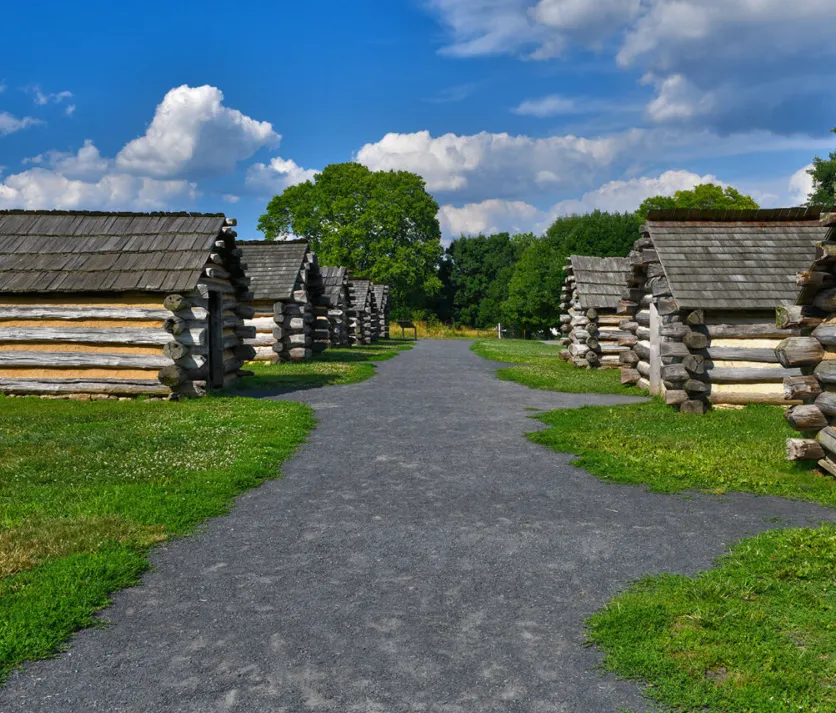
- Walk Through Soldiers’ Hut Replicas: Step inside realistic replicas of the huts used by the Continental Army during their winter stay.
- Visit the National Memorial Arch: A powerful tribute to the resilience and unity of the Continental Army.
- Explore the Washington Memorial Chapel: A historic stone church offering a peaceful retreat within the park.
- Stop by the Visitor Center: Learn about the history of Valley Forge through interactive exhibits, or grab a map and souvenirs.
- Join a Ranger Program: Participate in a guided tour to gain deeper insight into the park’s Revolutionary War significance.
- Bike the Multi-Use Trail: Ride through some of the park’s most scenic areas on this popular trail.
- Relax in Mount Misery Meadow: A quiet, scenic spot for picnicking or a peaceful rest.
- Photograph the Knox Covered Bridge: Capture a historic moment at this charming photo stop.
- Attend Living History Events: Experience reenactments, encampments, and heritage days during seasonal events.
Best Hikes (Beginner to Advanced)
- Valley Trail: A flat, paved path perfect for families and casual walkers.
- Mount Joy Trail: A moderate loop with some steeper sections, winding through wooded hills.
- Joseph Plumb Martin Trail: A 5.5-mile loop with varied terrain and historical landmarks along the way.
- Mount Misery Trail: For more experienced hikers, this trail offers elevation and seclusion.
- River Trail: A peaceful trail following the Schuylkill River with easy terrain and great views.
Packing List
- Comfortable hiking shoes or walking sneakers
- Light layers and a rain jacket depending on the season
- Water bottle and trail snacks
- Sunscreen, hat, and sunglasses
- Park map or a trail app
- Camera or smartphone for photos
- Optional: Picnic blanket or folding chair
- Daypack for gear
- Basic first aid supplies (especially if hiking)
- Extra socks and bug spray for spring/summer hikes
Where to Stay
There are numerous hotels around the Valley Forge area, offering a variety of accommodations for those looking to stay nearby. Check local options for your visit.
Things to Know Before You Go
- Admission: Free entry and parking.
- Hours: Open daily, usually from dawn to dusk, with the Visitor Center open from 9 AM to 5 PM.
- Pets: Leashed pets are welcome on trails but not inside buildings.
- Accessibility: The Visitor Center and several paved trails are wheelchair accessible.
- Restrooms and Water: Available at main facilities, but plan ahead for longer hikes.
- Events: Be sure to check the park’s official website for details on seasonal reenactments and ranger-led programs.
- Cell Service: Cell reception is generally reliable but may drop in more remote areas.
- Weather: Conditions can change quickly, particularly in spring and fall, so it’s a good idea to check the forecast before heading out.
Final Thoughts
Valley Forge National Historical Park offers more than just a historical tour; it’s a place to reflect on the sacrifices that shaped the United States. With beautiful landscapes, rich history, and accessible trails, it’s the perfect destination for those looking to immerse themselves in the story of the American Revolution. Whether you’re walking through history or exploring the park’s serene natural beauty, you’ll leave with a greater appreciation for the endurance and unity that helped build a nation.